
Crytodop: The Complete Guide to Features, Tokenomics, and Use Cases
Table of Contents
- What Is Crytodop?
- How Crytodop Works Under the Hood
- Core Features of Crytodop
- Crytodop vs Alternatives
- Real-World Use Cases
- Getting Started on Crytodop
- Tokenomics and Governance
- Security, Risk, and Compliance
- Fees, Rewards, and Sustainability
- Roadmap and Future Outlook
What Is Crytodop?
For a smooth and secure Bitcoin purchase experience, visit https://changehero.io/buy/btc and enjoy a platform built for speed, transparency, and ease of use.
Crytodop is an all-in-one crypto hub designed to simplify how people interact with digital assets. Instead of juggling a separate wallet, DEX, NFT marketplace, and analytics tool, crytodop bundles the essentials into a non-custodial, multi-chain platform. Whether you’re a trader chasing the best price across decentralized exchanges, a DeFi investor seeking yield, or a creator minting NFTs, crytodop centralizes workflows without taking custody of your funds.
At its core, crytodop focuses on accessibility and control. Users connect their wallets—hardware, mobile, or browser-based—and can swap tokens, bridge assets across chains, analyze on-chain trends, and manage positions with institutional-style risk tools. Because it is non-custodial, you keep your private keys, while the app provides routing, discovery, and execution layers to streamline complex blockchain operations into a few clicks.
What makes crytodop compelling is its balance between power and simplicity. Pro traders get advanced order routing, slippage controls, and analytics; newcomers get clear prompts, built-in education, and safety reminders. With a modular design, the platform can evolve quickly as crypto markets, networks, and standards change—so you won’t need to relearn your stack every cycle.
How Crytodop Works Under the Hood
Crytodop operates as a non-custodial orchestration layer that sits on top of multiple blockchains and liquidity venues. Its architecture comprises three main components: a connectivity layer to talk to chains and protocols; an intelligence layer for routing, pricing, and risk; and an execution layer that submits transactions, batches operations, and handles retries.

The connectivity layer indexes on-chain data, listens for mempool updates where supported, and integrates with oracles for price references. This layer powers real-time token discovery, portfolio valuation, and cross-chain bridging. Meanwhile, the intelligence layer evaluates the best paths for swaps (e.g., splitting orders across AMMs and RFQ providers), estimates gas, and simulates fills to reduce slippage and failed transactions. By using multi-venue quotes and liquidity fragmentation awareness, crytodop aims to consistently secure competitive execution.
On the execution side, crytodop leverages audited smart contracts that can route funds to and from partner protocols. For certain operations (like batching approvals, performing multi-step swaps, or bridging), the app uses meta-transactions or account abstraction where available to keep flows simple. Fail-safes—such as deadline enforcement, minimum received tokens, and path verification—are embedded to mitigate common DeFi pitfalls. Data privacy, device fingerprinting, and rate limiting help protect users from phishing and automated abuse, while support for hardware wallets and transaction previews give you the final say before anything hits the chain.
Core Features of Crytodop
From day-one basics to power-user tools, crytodop’s feature set is designed to compress the crypto learning curve while enabling advanced strategies. Here are the flagship capabilities that make it stand out in a crowded Web3 landscape:
- Non-custodial, multi-chain wallet: Connect popular wallets or create a new one; retain full control of your keys and assets.
- DEX and RFQ aggregation: Route trades across AMMs, order books, and RFQ providers to improve price, reduce slippage, and minimize MEV impact.
- NFT marketplace and launch tools: Discover, mint, list, and manage collections with creator royalties and built-in analytics.
- Staking and liquidity pools: Access curated pools and vaults with transparent APYs, risks, and protocol-level details before you deposit.
- Cross-chain bridge: Move assets across supported networks using secure bridge partners, with route suggestions to optimize cost and speed.
- On-chain analytics: Track portfolio performance, PnL, realized/unrealized gains, and address tagging to understand your moves.
- Social and copy trading: Follow strategies, share trade theses, and optionally mirror positions with configurable risk limits.
- Fiat on/off-ramps: Buy and sell crypto via bank transfer or card in supported regions, with clear KYC/AML workflows.
- Alerts and automation: Set price, gas, and event alerts; schedule DCA orders or rebalance target allocations.
- Developer API and SDK: Integrate crytodop data and routing into your own app, bot, or analytics dashboard.
Crytodop vs Alternatives
Where does crytodop sit among centralized exchanges, single-chain DEXs, and wallet-only apps? The comparison below highlights key trade-offs on custody, breadth, and execution.
| Aspect | Crytodop | Centralized Exchange | Single-Chain DEX | Wallet-Only App |
|---|---|---|---|---|
| Custody | Non-custodial (you hold keys) | Custodial (platform holds assets) | Non-custodial | Non-custodial |
| Chain Coverage | Multi-chain, cross-bridge | Varies; often limited withdrawals | One or few networks | Multiple, but limited trading |
| Price Execution | Aggregator with smart routing | Internal order book liquidity | AMM pools only | No aggregation |
| NFT Support | Integrated marketplace | Usually separate or none | Rare | View/send; limited trading |
| DeFi Access | Curated staking/vaults | Limited or custodial yields | Protocol-specific | Manual, fragmented |
| Regulatory Exposure | KYC for fiat ramps only | Full account KYC/limits | No KYC, on-chain only | No KYC, on-chain only |
The upshot: crytodop preserves self-custody while offering multi-venue execution and broader functionality than a typical wallet. It avoids the counterparty risk of custodial platforms yet reduces the complexity of DIY DeFi—an attractive blend for both beginners and pros.
Real-World Use Cases
Crytodop’s versatility shows up in day-to-day scenarios. A swing trader can connect a hardware wallet, scan aggregated quotes, set a tight slippage limit, and split a large order across venues to avoid moving markets. A DeFi investor might use curated vaults to ladder stablecoin yields with risk labels, diversify across chains via the bridge, and track PnL with on-chain analytics.
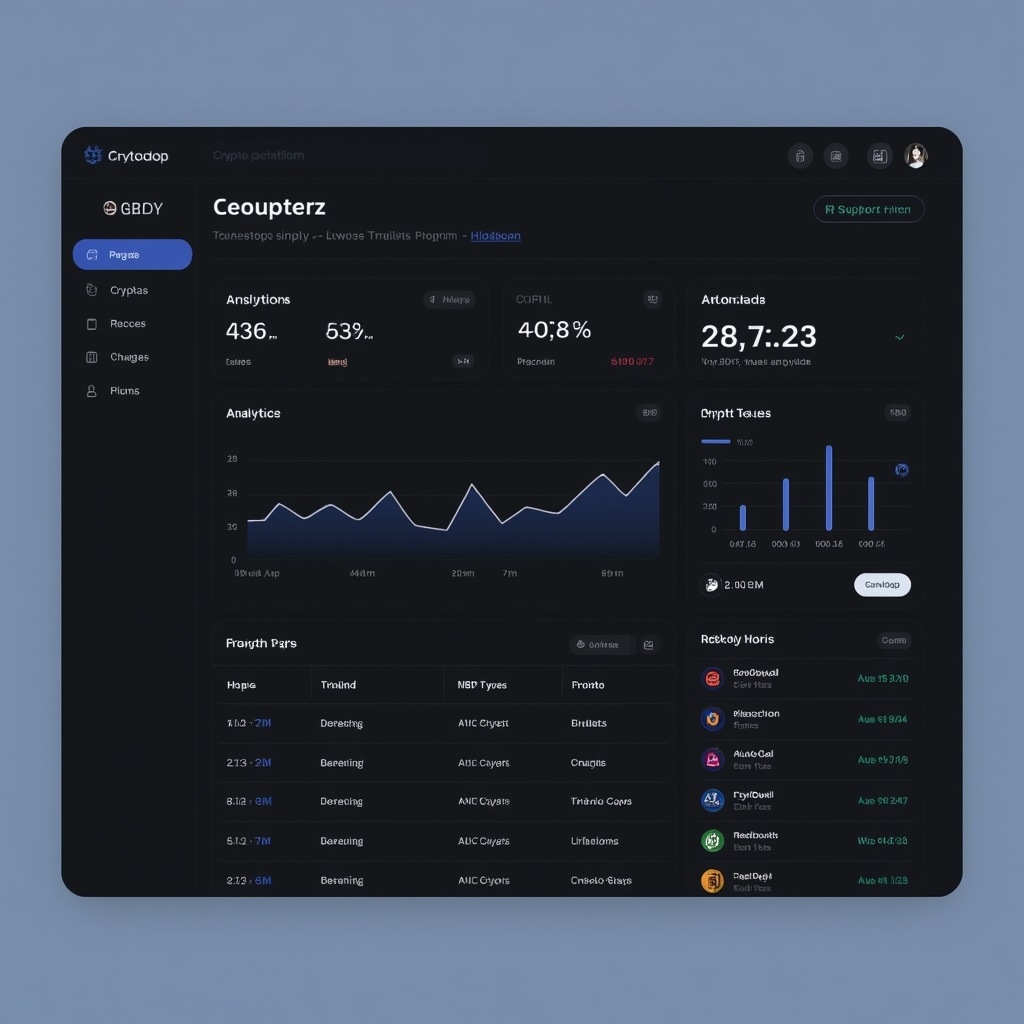
Creators and collectors can mint NFTs, set royalties, and list across multiple marketplaces from one interface, with floor price, liquidity, and bid-side depth displayed in real time. Treasury managers at DAOs can standardize operations by enforcing multi-sig approvals while using crytodop’s execution layer to route swaps efficiently. Even newcomers benefit: they can on-ramp with fiat, complete a first swap, and then stake tokens to learn compounding—all without leaving the platform’s unified flow.
Because crytodop is chain-agnostic, it can adapt to regional needs. In areas with high gas fees, it suggests L2 or sidechain alternatives. For cross-border remittances, it pairs low-volatility assets with fast bridges to contain slippage and costs. The result is a pragmatic toolkit that meets users where they are.
Getting Started on Crytodop
Getting started with crytodop is designed to be fast, secure, and beginner-friendly. Follow these steps to move from zero to your first on-chain action with confidence.
- Connect or create a wallet: Link a hardware, mobile, or browser wallet. If creating a new one, write down and securely store your seed phrase offline.
- Enable security features: Turn on biometric/2FA where supported, whitelist withdrawal addresses, and consider a hardware wallet for large balances.
- Verify if using fiat: If you plan to buy crypto with card or bank transfer, complete KYC in-app through the fiat ramp partner.
- Fund your wallet: Transfer crypto from another wallet or buy in-app. Keep some native tokens for gas on your target network.
- Select a network: Choose the chain with the best combination of fees, speed, and liquidity for your task (e.g., L2 for low-cost swaps).
- Place your first trade: Use crytodop’s aggregator, set slippage/deadline, preview the route and gas estimate, then confirm on your wallet.
- Explore DeFi and NFTs: Stake assets in curated pools, mint or list NFTs, and set price alerts or DCA schedules to automate habits.
Tip: Before larger moves, simulate a small transaction to test the route and fees. Crytodop’s previews, including minimum received tokens and path details, help prevent surprises.
Tokenomics and Governance
If crytodop issues a native token (for illustration, CDOP), its design should directly reinforce platform utility and long-term sustainability. Utility can include fee discounts on swaps and NFTs, staking to boost rewards or unlock premium features, and governance voting over listings, fee tiers, and treasury strategy. Token-gated analytics or higher API limits are additional value levers for power users and developers.
A healthy token economy balances emissions with real demand. Part of platform fees can flow to a treasury, with allocations for buyback-and-burn, grants, audits, and liquidity. Stakers might receive a portion of protocol revenue, aligning incentives with long-term platform growth. Distribution could follow a transparent split—such as community/staking (40%), ecosystem growth (25%), core contributors (20%), investors/market makers (10%), and public liquidity (5%)—with multi-year vesting and cliff schedules to discourage short-term churn.
Governance should be progressive: start with a core team to move quickly, then expand voting rights to the community via a DAO as processes mature. Snapshot voting, on-chain execution, and auditor-reviewed proposals can build trust while avoiding governance theater.
Security, Risk, and Compliance
Security on crytodop centers on self-custody and rigorous smart contract practices. Users sign transactions with their own keys. Smart contracts should be audited by multiple firms, continuously monitored, and covered by a live bug bounty. Transaction previews display exact contract calls, token approvals, and minimum receive amounts, reducing the chance of malicious approvals or sandwich attacks. Where available, private relay options and MEV-aware routing can further protect sensitive trades.
On the account side, device checks, domain verification, and phishing warnings help users avoid scams. Hardware wallet support and address whitelists are recommended for high-value accounts. For compliance, fiat ramps follow standard KYC/AML checks; on-chain activity remains permissionless. Crytodop can provide risk disclosures per pool or token—highlighting audits, oracle dependencies, and historical volatility—so users can make informed decisions.
No platform can eliminate risk. Smart contract bugs, market gaps, bridge exploits, or oracle failures can impact outcomes. Crytodop’s role is to minimize exposure via curated integrations, clear warnings, and user-controlled limits, while encouraging best practices like diversified holdings, cold storage for long-term assets, and cautious leverage usage.
Fees, Rewards, and Sustainability
Crytodop’s fee model should be simple, transparent, and competitive, while creating room for long-term reinvestment into the ecosystem. Below is an illustrative snapshot of how fees and rewards might look. Actual numbers vary by chain, venue, and market conditions.
| Product | Fee Structure | Notes |
|---|---|---|
| Swap Aggregator | ~0.15% platform fee + DEX LP fee + gas | Route-splitting seeks best net price after all costs |
| RFQ/Order Book Fills | Maker ~0.10%, Taker ~0.20% | Varies by venue/liquidity partner |
| Bridge | ~0.10% + network fees | Shows ETA and total cost before execution |
| NFT Marketplace | ~2.0% on successful sales | Creator royalties enforced per collection rules |
| Staking/Vaults | Protocol-level performance/management fees | Displayed as net APY after fees |
Fee transparency matters because execution quality is net of all costs. Crytodop’s route simulator estimates gas, LP fees, and platform fees upfront, so you can compare across networks and venues. For loyalty and governance alignment, a portion of platform revenues can be redirected to stakers, liquidity incentives, grants, and periodic buyback-and-burn mechanisms. This creates a flywheel: more activity funds deeper integrations and audits, which attracts more users and liquidity.
Rewards should emphasize sustainability over outsized, short-lived emissions. Time-weighted staking boosts, fee rebates capped by volume tiers, and seasonal quests backed by real revenue are better than inflationary token giveaways. Crytodop’s analytics help track realized APY, compounding effects, and risk-adjusted returns—so you can optimize without chasing mirages.
Roadmap and Future Outlook
A credible roadmap for crytodop blends pragmatic shipping with forward-looking research. Near-term, expect more L2 and sidechain integrations, expanded NFT liquidity routing, intent-based order submission to reduce failed transactions, and richer portfolio analytics (e.g., taxable events, realized PnL). MEV protection, gas sponsorship for small transactions, and improved bridging UX are also prime candidates.
Mid-term goals include perpetuals and options aggregation, margin support with isolated risk, and advanced automation like grid strategies or delta-neutral vaults. Deeper DAO governance with on-chain execution and a published policy for listings and delistings will add transparency. As account abstraction matures, crytodop can offer social recovery, session keys for dApps, and bundled multisig flows—bringing Web2-grade UX to Web3 security.
Longer term, research tracks may explore zk-based proofs for private balances, cross-chain intents for unified liquidity, and data availability layers to reduce costs at scale. Strategic partnerships with oracles, custodians for institutions, and compliance providers can open new markets without diluting the non-custodial ethos. If crytodop continues to prioritize user control, clear incentives, and relentless UX refinement, it can stand as a durable crypto superhub across cycles.
FAQ
What is crytodop and who is it for?
Crytodop is a non-custodial crypto toolkit that unifies portfolio tracking, on-chain analytics, and trade execution across multiple blockchains. It’s built for retail traders, power users, and teams who want a fast, privacy-first way to manage DeFi, NFTs, and tokens without giving up their keys.
How does crytodop work under the hood?
You connect wallets or paste public addresses, and crytodop indexes your on-chain activity, normalizes balances across networks, and surfaces insights like PnL, cost basis, and risk exposure. When you trade, it routes orders to supported DEXs/bridges and generates transactions you sign with your own wallet.
Is crytodop a wallet, an exchange, or an analytics platform?
It’s an analytics and execution layer that plugs into your existing wallets and DeFi protocols. Crytodop never holds custody; it provides portfolio intelligence, discovery tools, and a trade router that lets you act through your wallet on CEX/DEX rails where supported.
Which blockchains and assets does crytodop support?
Crytodop focuses on major EVM chains (Ethereum, Polygon, Arbitrum, BNB Chain, Avalanche) and expands to non-EVM networks based on demand. It tracks fungible tokens, NFTs, liquidity positions, and popular staking derivatives where on-chain data is available.
Do I need KYC to use crytodop?
No KYC is required for core non-custodial features like tracking and DEX execution. If you opt into any partner services that are regulated (for example, fiat ramps), additional verification may be needed per provider.
Does crytodop ever hold my private keys or funds?
No. Crytodop is non-custodial and keyless. You connect wallets like MetaMask or hardware wallets, sign transactions locally, and funds remain in your control on-chain.
How does crytodop keep my data secure and private?
Crytodop minimizes data collection, supports read-only wallet connections, encrypts account data at rest, and uses secure APIs. You can unlink wallets anytime, and optional privacy modes reduce metadata like IP logs where legally permissible.
What features does crytodop include out of the box?
Portfolio and PnL tracking, real-time prices, on-chain analytics, token and NFT discovery, DEX routing, cross-chain balance views, watchlists, gas and slippage controls, custom alerts, CSV/JSON exports, and team workspaces in higher tiers.
Can I connect multiple wallets and hardware devices?
Yes. You can link unlimited public addresses across multiple chains, label them by strategy or team, and view consolidated or segmented performance. Hardware wallets connect via your preferred wallet interface.
What are crytodop’s fees and pricing?
Tracking and basic analytics are free. Pro tiers add advanced analytics, execution perks, deeper history, team collaboration, and priority support for a monthly or annual subscription. Network gas and protocol fees apply to on-chain actions.
Does crytodop have a token or rewards program?
Crytodop does not require a token to function. Any rewards, referrals, or loyalty perks—if offered—are optional and designed to align with platform usage, not to gate essential features.
Can I use crytodop for DeFi staking, liquidity, and farming?
Yes. You can discover pools, assess yield and risk, and initiate positions through supported protocols. Crytodop shows APR components, fee share, and historical performance where available so you understand what drives returns.
How does crytodop handle gas fees and failed transactions?
You set gas preferences and slippage. Crytodop surfaces fee estimates, supports transaction simulation when possible, and offers routing choices that balance price impact and fees. You only pay network fees for transactions you sign.
Does crytodop offer an API or integrations for developers?
Pro users and partners can access read APIs for portfolio data, webhooks for alerts, and export endpoints. Integration guides help connect your internal dashboards, quant models, or reporting tools.
Is there a mobile app and real-time notifications?
Yes. The mobile app mirrors your dashboard with push alerts for price moves, wallet activity, liquidations, and custom triggers. Desktop users can enable browser and email alerts as well.
How accurate are pricing, PnL, and analytics in crytodop?
Crytodop aggregates prices from reputable liquidity sources, reconciles token metadata, and maps historical transactions to compute cost basis and realized/unrealized PnL. You can adjust pricing sources and accounting methods for edge cases.
Can crytodop help with taxes and reporting?
It provides categorized transaction histories, realized gains reports, and exports compatible with popular tax software. You remain responsible for filings; consult a tax professional for advice in your jurisdiction.
Is crytodop available globally and compliant with regulations?
Crytodop is accessible in most regions, subject to local laws and sanctions. It enforces compliance for restricted jurisdictions and partners with regulated providers where applicable.
What kind of support does crytodop offer?
Email and in-app chat for free users, with faster SLAs, onboarding, and account managers for Pro and enterprise plans. A knowledge base and status page keep you informed about updates and incidents.
What’s on the crytodop roadmap?
Expanded chain support, deeper NFT analytics, smarter alerts, more bridges/DEX integrations, improved simulations, and enhanced team features—prioritized with community feedback and transparent changelogs.
How does crytodop compare to centralized exchanges (CEX)?
CEXs are custodial with order books, fiat ramps, and mandatory KYC; they hold your assets. Crytodop is non-custodial, routing trades through your wallet on DEXs/bridges, focusing on analytics and execution without taking custody.
How is crytodop different from a DEX aggregator?
Aggregators only route swaps across DEXs for best price. Crytodop includes DEX routing plus full portfolio tracking, risk analytics, PnL, alerts, and cross-chain visibility so you can decide and act in one place.
Crytodop vs a wallet like MetaMask—do I need both?
A wallet stores keys and signs transactions. Crytodop analyzes portfolios, finds opportunities, and generates transactions you sign with your wallet. They complement each other; crytodop does not replace your wallet.
Crytodop vs portfolio trackers—what’s the edge?
Many trackers show balances and prices. Crytodop adds trade execution, actionable on-chain analytics, position-level PnL, DeFi/NFT insights, and pro features like alerts, simulations, and team workspaces.
How does crytodop compare to blockchain explorers like Etherscan?
Explorers expose raw on-chain data per transaction or address. Crytodop abstracts, labels, and contextualizes that data across wallets and chains, then layers execution, alerts, and performance analytics.
Crytodop vs copy-trading platforms—what’s the difference?
Copy-trading mirrors someone else’s moves, often custodially. Crytodop focuses on independent decision-making with analytics, watchlists, and alerts. You keep custody and control strategy parameters.
Crytodop vs trading bots—do you offer automation?
Bots automate predefined strategies. Crytodop emphasizes human-in-the-loop execution with simulations and alerts. Light automation like recurring buys or rebalancing may be available, but you approve transactions.
How does crytodop stack up against tax software?
Tax software specializes in filings and jurisdictional rules. Crytodop prepares clean datasets—cost basis, gains, and exports—and integrates with tax tools so you can file accurately without manual reconciliation.
Crytodop vs cold storage solutions—what should I use?
Cold wallets secure keys offline; they’re essential for long-term storage. Crytodop does not store keys and works with your cold wallets via watch-only tracking and signed transactions when you choose to move funds.
Is crytodop a replacement for signal groups or newsletters?
Signals provide trade ideas; quality varies. Crytodop gives real-time market and wallet analytics, alerts, and discovery tools so you can validate ideas with data rather than rely on opaque tips.
Crytodop vs crypto screeners—what’s unique?
Screeners rank tokens by metrics. Crytodop ties screening to your actual holdings, execution paths, and risk dashboards, letting you move from discovery to action with context and custody intact.
How does crytodop differ from DeFi dashboards like DeBank or Zerion?
Crytodop emphasizes pro-grade analytics, position-level accounting, simulations, and team workflows alongside execution. It aims to serve both active traders and teams who need deeper insight and coordination.
When should I choose a CEX over crytodop?
Use a CEX for deep order-book liquidity, fiat on/off-ramps, and certain derivatives not available on-chain in your region. Use crytodop for non-custodial management, on-chain execution, and analytics across DeFi and NFTs.
Can I migrate from other trackers or dashboards to crytodop easily?
Yes. Import addresses, CSVs, and custom labels, then map assets across chains. Crytodop deduplicates and normalizes data to recreate your portfolio view and history with minimal manual cleanup.